

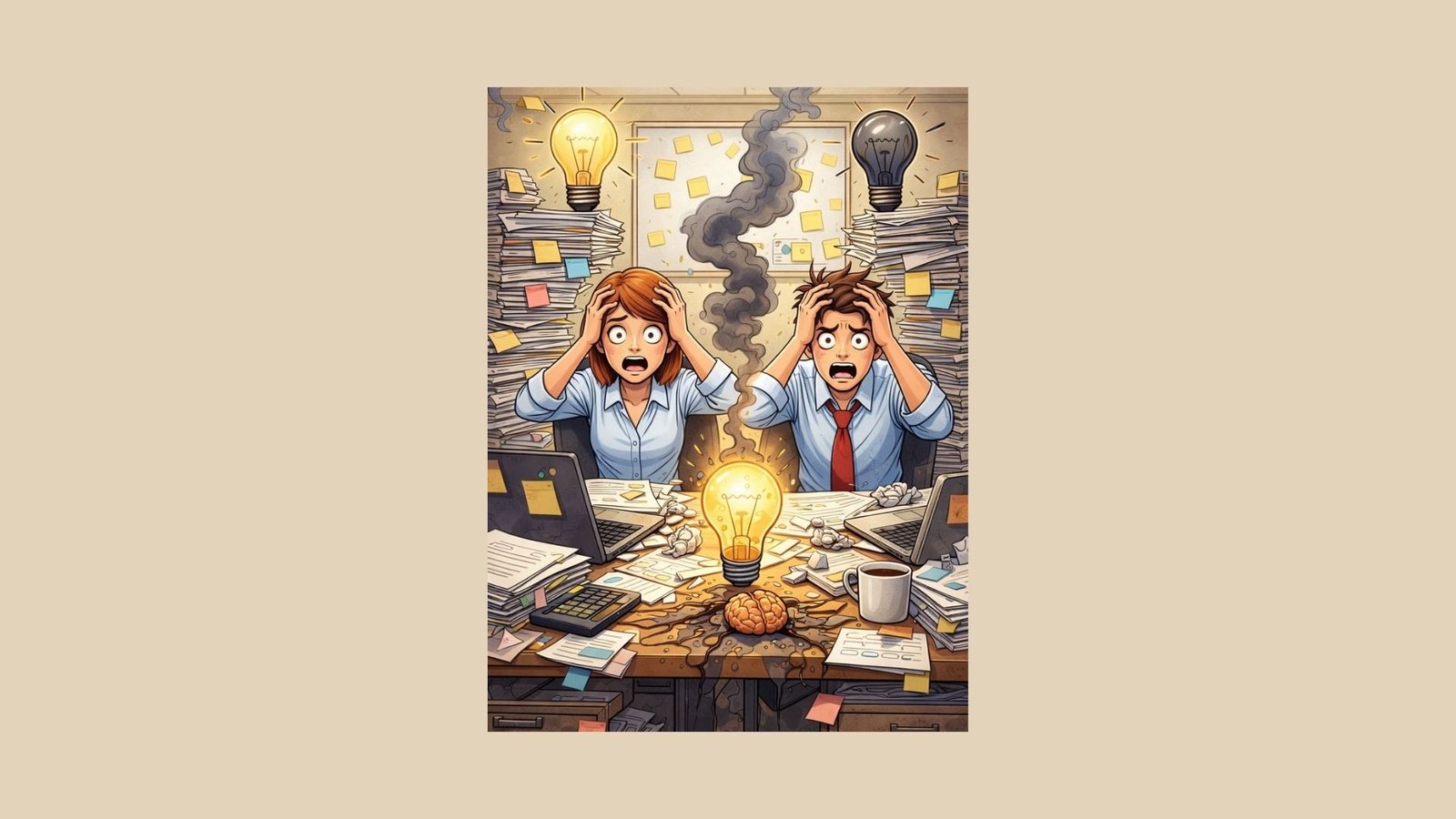
Overworking employees to their deathbed
The impact of workload in organisations is causing innovation deficiencies, and this issue is becoming increasingly difficult to ignore. Employees’ workload is becoming problematic in organisations, as employees are finding it difficult to balance work life and personal life because of the amount of work that they have to do at home when they leave their office at the end of the day. What was once considered overtime has now quietly become an expectation, blurring the boundaries between professional responsibility and personal time. Laptops remain open late into the evening, emails are answered well past working hours, and weekends are no longer protected. Over time, this constant pressure erodes creativity, motivation, and long-term productivity.
Innovation thrives on mental space, reflection, and freedom to think differently. When employees are overwhelmed by relentless workloads, their cognitive energy is consumed by simply keeping up rather than thinking ahead. Instead of generating new ideas or questioning existing processes, staff focus on survival: meeting deadlines, clearing inboxes, and managing stress. This creates organisations that are operationally busy but strategically stagnant, mistaking activity for progress.
The concept of 9–5 is slowly dying as companies such as Google and Apple, where employees have voted the best place to work, are slowly getting rid of this notion of 9–5. Traditional working hours were designed for industrial efficiency, not for knowledge-based, creative industries. In a digital economy where output matters more than presence, the rigid structure of fixed hours increasingly feels outdated. Employees are no longer judged by how long they sit at a desk, but by the value they create.
These companies believe that innovations happen when employees are given a ‘laissez-faire’ approach, whereby employees are given as much time as long as they complete their task briefs, which are set weekly. This philosophy reflects a deeper understanding of human productivity. Creativity cannot be forced into time slots; it emerges when individuals feel trusted, autonomous, and psychologically safe. By focusing on outcomes rather than hours, organisations allow employees to work when they are most effective, whether that is early in the morning, late at night, or in short, focused bursts throughout the day.
However, the contrast between progressive organisations and more traditional ones is stark. Many companies continue to increase workloads without reconsidering how work is structured or supported. Lean staffing models, cost-cutting measures, and constant performance monitoring place employees under sustained pressure. In these environments, innovation becomes an additional burden rather than a natural outcome. Employees are told to “be creative” while being denied the time and freedom required to do so.
The consequences extend beyond innovation alone. Burnout, disengagement, and high staff turnover are increasingly common, particularly among younger employees who value flexibility and purpose over rigid corporate norms. When organisations fail to address workload imbalance, they risk losing talent to competitors who prioritise well-being and trust. In the long term, this weakens organisational memory, disrupts team cohesion, and further undermines innovation capacity.
There is also a cultural dimension to this issue. Constant busyness is often rewarded and even glorified, creating an environment where overwork is seen as commitment. This mindset discourages employees from setting boundaries and normalises exhaustion. Yet research consistently shows that chronic overwork reduces problem-solving ability and increases the likelihood of errors. An exhausted workforce may appear productive on the surface, but it lacks the mental clarity required for meaningful innovation.
To address innovation deficiencies, organisations must rethink workload as a strategic issue rather than an individual failing. Flexible working models, realistic task allocation, and genuine respect for personal time are not perks; they are prerequisites for sustainable creativity. Leaders must recognise that innovation is not generated through pressure alone, but through balance, trust, and intentional design of work.
Ultimately, organisations that continue to overload their employees while demanding innovation will find themselves falling behind. Those that embrace flexibility, autonomy, and humane workloads will not only protect their workforce but also unlock the creativity needed to remain competitive. In a rapidly changing world, innovation is no longer optional, and neither is the responsibility to create conditions where it can genuinely flourish.

