

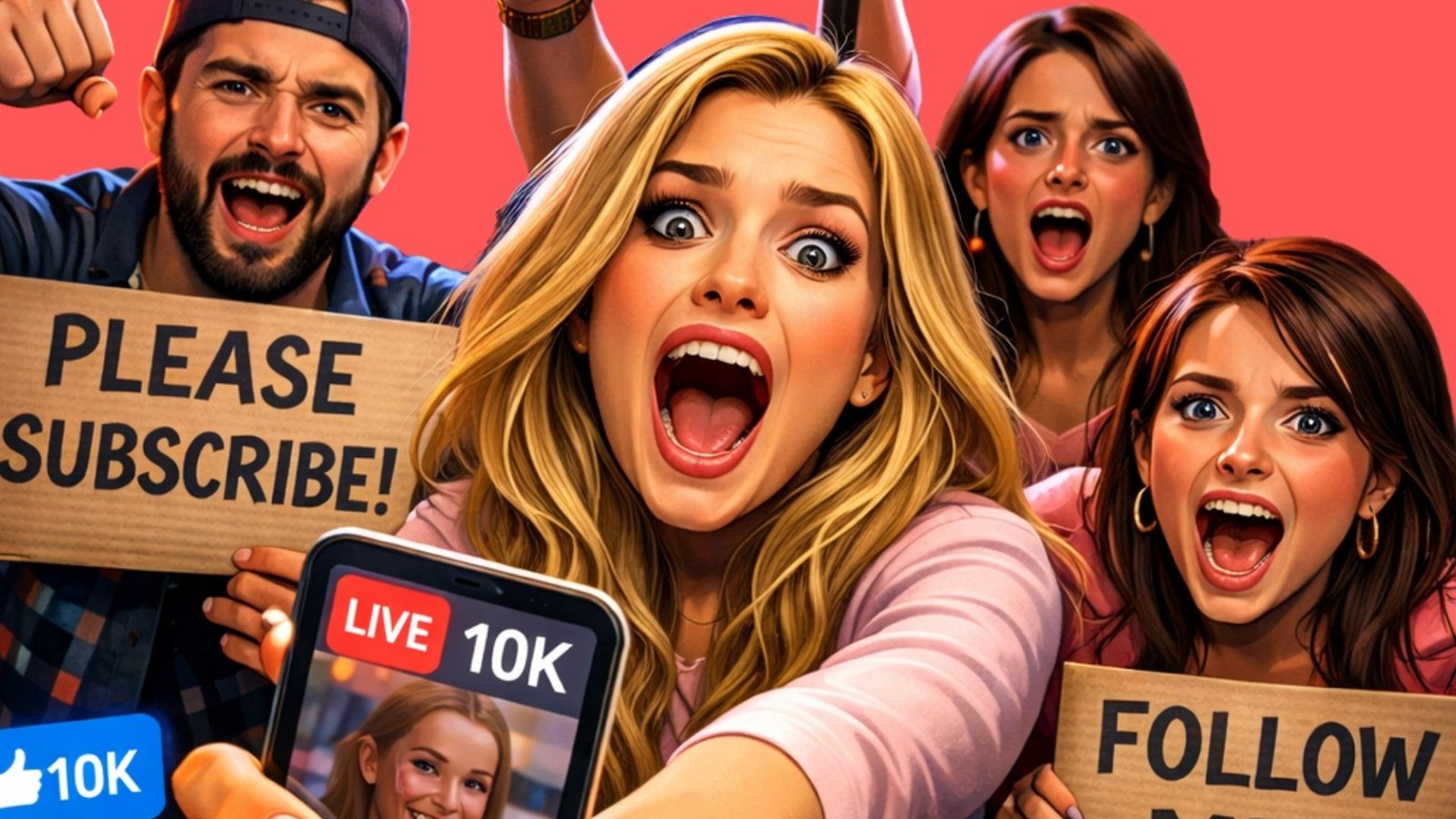
What would they do for fame?
Reaching audiences on social media platforms has become increasingly difficult as the digital space grows more saturated every year. Millions of users are now competing for attention, visibility, and recognition in an environment that rewards popularity and virality above all else. At the same time, more people than ever before have begun to see social media as a legitimate career path. The idea that an individual can transition from an ordinary online user to a globally recognised influencer or even achieve long-term financial security has encouraged many to pursue social media fame as a profession.
However, the reality of becoming successful online is far more complicated than it appears. Although social media may look like an easy gateway to fame and wealth, the competition is extremely intense. The barrier to entry is paradoxical: while anyone can create an account and post content, only a small percentage of creators ever achieve widespread visibility or sustained success. This imbalance creates a highly competitive digital environment in which aspiring influencers feel constant pressure to stand out from the crowd.
As a result, a growing number of individuals resort to extreme or attention-seeking behaviour to gain followers. These so-called “desperate influencers” attempt to capture the public’s attention by producing sensational, exaggerated, or sometimes absurd content. Their primary objective is to generate engagement, likes, shares, comments, and followers, regardless of whether the content demonstrates genuine creativity or meaningful value. In many cases, the pursuit of online validation becomes the driving force behind their actions.
These desperate influencers can often be described as a collective group of personalities whose content lacks originality or skill. Their videos frequently reach millions of viewers not because of talent or expertise, but because they rely on simplistic, repetitive, or even ridiculous trends that are designed to go viral. Examples of such content include performing exaggerated pranks, participating in low-effort dance challenges, or engaging in silly stunts that require little technical ability. While these videos can attract large audiences, they often prioritise spectacle over substance and lack authenticity.
The widespread appeal of this type of content reflects the nature of modern social media algorithms. Platforms are designed to promote material that captures immediate attention and encourages rapid interaction. As a result, content that is loud, shocking, humorous, or unusual is often rewarded with greater visibility. This system can inadvertently encourage influencers to prioritise attention-grabbing behaviour rather than thoughtful or creative content creation.
In this sense, the phenomenon of desperate influencers represents a by-product of the digital attention economy. The pressure to remain relevant and visible can push creators towards increasingly exaggerated performances, blurring the line between entertainment and desperation. For some individuals, the desire to place their name on the metaphorical “social media wall of fame” becomes so strong that they are willing to sacrifice authenticity in exchange for recognition.
Nevertheless, it is important to acknowledge that not all influencers fit this description. While some rely on low-effort viral trends, many content creators bring genuine talent, creativity, and dedication to their work. These individuals invest significant time and effort into producing engaging videos that entertain, educate, or inspire their audiences. Their success often comes from originality, humour, storytelling, or specialised knowledge rather than simple attempts to attract attention.
Talented influencers demonstrate that social media can still function as a platform for creativity and meaningful expression. Some creators develop unique comedic styles, produce insightful commentary, or share informative content that resonates with viewers in authentic ways. In these cases, humour and entertainment are not merely superficial tactics but carefully crafted forms of communication that reflect genuine skill.
Ultimately, the rise of desperate influencers highlights the broader cultural dynamics of the social media age. The desire for recognition, validation, and financial success drives many individuals to participate in the digital race for popularity. Yet within this crowded landscape, there remains a clear distinction between those who rely solely on attention-seeking tactics and those who cultivate talent and originality. As social media continues to evolve, audiences may increasingly learn to recognise and appreciate creators whose content offers more than fleeting viral moments.