
Are they cash-rich or asset-rich?
It increasingly feels as though everyone is a billionaire nowadays. Headlines regularly announce new entrants into the so-called billionaire club, creating the impression that extreme wealth has become almost commonplace. Yet this perception masks a crucial distinction that is often ignored: the difference between being cash-rich and being asset-rich. While both categories may technically qualify someone as a billionaire on paper, the reality of their wealth is fundamentally different.
Two decades ago, becoming a millionaire was an extraordinary achievement. It usually required exceptional talent, a bold entrepreneurial vision, or the ability to identify and exploit a gap in the market with a truly unique product or service. Even then, success was far from guaranteed. Many brilliant ideas failed, and many talented individuals never saw their efforts translate into lasting wealth. Wealth accumulation was slower, riskier, and more tangible.
The digital age, however, has dramatically altered this landscape. Platforms such as YouTube, Instagram, and TikTok have created a new class of wealthy individuals whose fortunes are built on attention rather than traditional enterprise. Content creators can now generate immense income streams through advertising, sponsorships, and brand partnerships, amassing wealth at a pace previously unimaginable. This shift has blurred the public’s understanding of what wealth actually represents.
At the same time, many of yesterday’s millionaires have transformed into today’s billionaires, largely through the exponential growth of asset values. Stock prices, company valuations, and speculative investments have ballooned, particularly in the technology sector. As a result, individuals who were once comfortably wealthy are now labelled billionaires, not necessarily because they possess a billion pounds in cash, but because their assets are valued at that level.
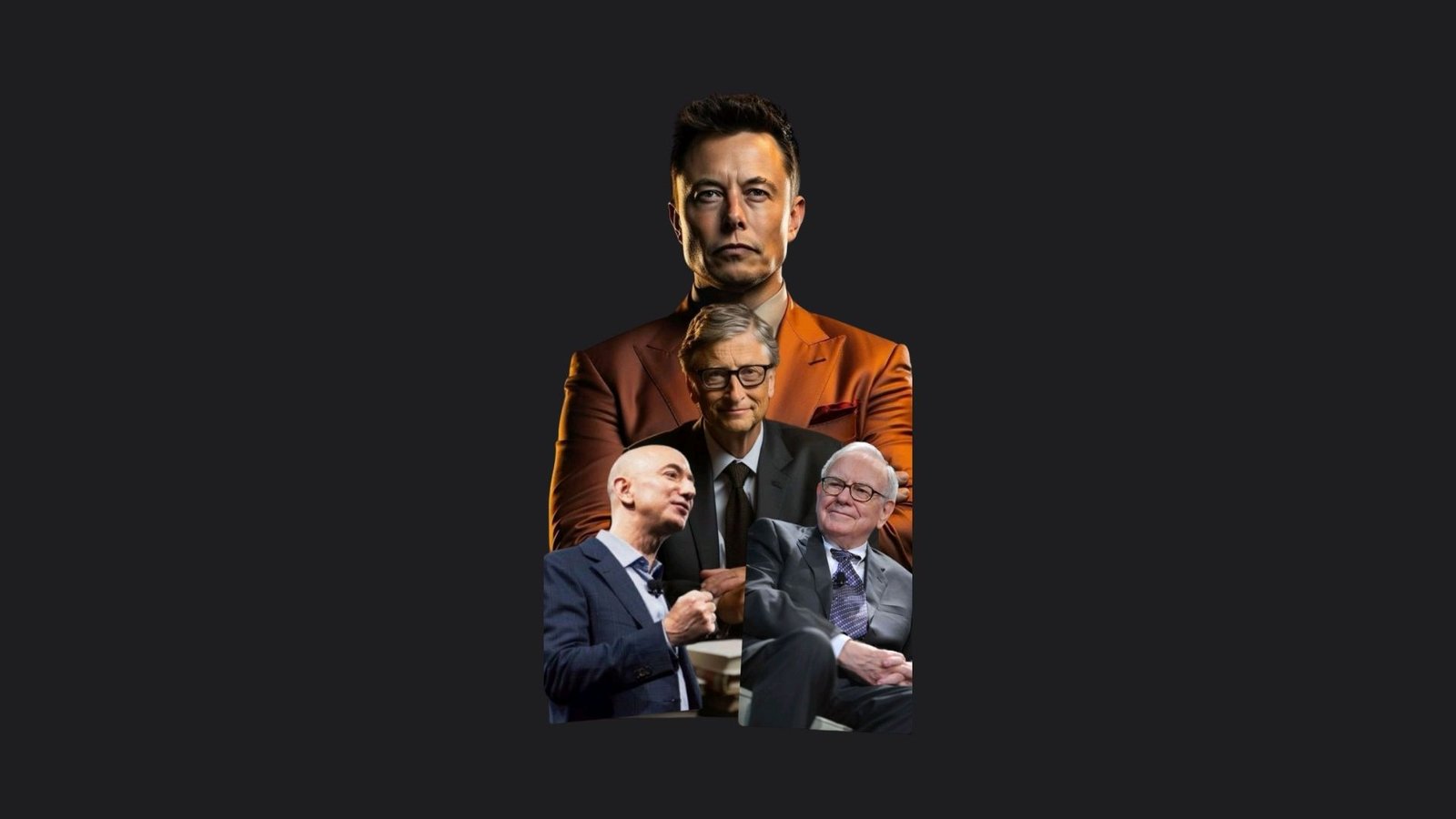
This is where the distinction becomes important. Cash-rich billionaires, such as Warren Buffett or Bill Gates, possess vast liquid reserves. Their wealth is not solely dependent on the daily fluctuations of share prices or company valuations. They have the financial freedom to deploy capital at will, purchasing businesses, property, or entire industries without needing to sell core assets or destabilise their portfolios.
By contrast, figures such as Elon Musk and Jeff Bezos are overwhelmingly asset-rich. Their wealth is tied directly to the performance and valuation of Tesla and Amazon. While their net worth may exceed tens or even hundreds of billions on paper, that wealth is largely illiquid. It exists in the form of shares, not cash. Converting even a fraction of that wealth into liquid assets would significantly affect the companies themselves and, by extension, their market value.
This raises an uncomfortable truth: many of the world’s billionaires are only billionaires so long as their companies continue to operate successfully. If Tesla or Amazon were to cease operations tomorrow, Musk and Bezos would immediately lose their billionaire status, reverting to being “merely” millionaires. Their wealth, impressive as it is, is conditional rather than absolute.
For this reason, there is a compelling argument that asset-rich billionaires should not be viewed in the same category as cash-rich ones. Being worth a billion on paper is not the same as having a billion at your disposal. True billionaire status, in its purest form, should arguably be reserved for those with the liquidity to act independently of their assets; individuals who can purchase any property, company, or venture outright without leveraging their existing holdings. Musicians such as Beyonce, Taylor Swift and Jay-Z are not billionaires in terms of cash-rich; they are asset-rich as their catalogues and revenues from tours have put them in the billionaire bracket.
This perspective also challenges the idea that there are thousands of genuine billionaires worldwide. While lists may claim there are over 3,000 billionaires globally, only a small fraction of these individuals are truly cash-rich. The majority sit atop vast but fragile towers of valuation, vulnerable to market corrections, regulatory shifts, or technological disruption.
Ultimately, the modern obsession with billionaire rankings oversimplifies wealth and distorts reality. Not all billions are created equal. In an era defined by inflated valuations and digital fortunes, it is worth remembering that liquidity still matters, and that being asset-rich is not the same as being truly, absolutely wealthy.