

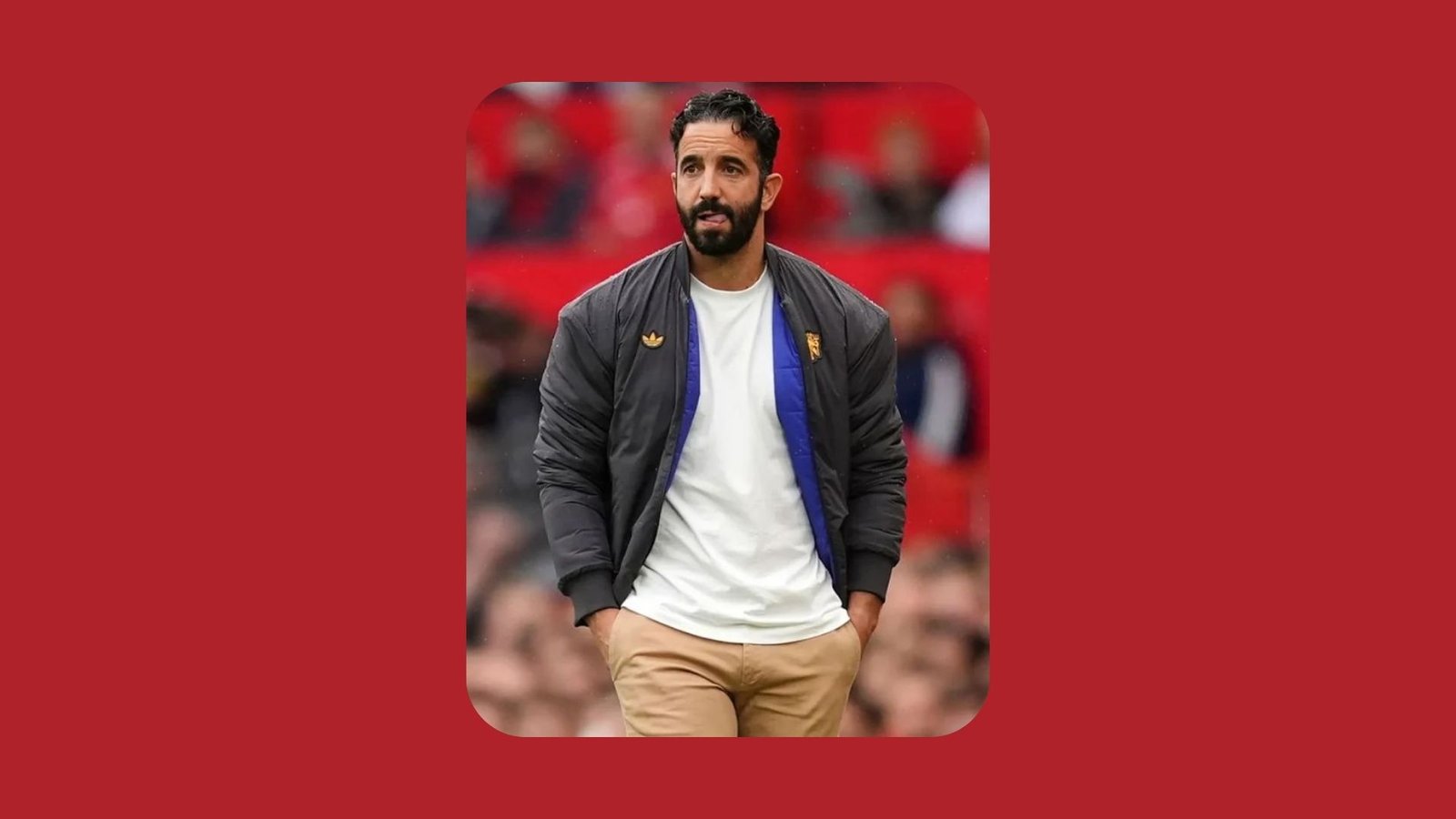
Maybe time to cut their losses
When Rúben Amorim arrived at Manchester United, expectations were sky-high as his rapid rise at Sporting CP had marked him as one of Europe’s brightest managerial prospects, a modern coach with tactical intelligence, charisma, and a clear footballing philosophy. Many believed he would be the man to steady the ship at Old Trafford, finally. The long-awaited figure to restore identity, structure, and success to a club that has wandered without direction for over a decade.
Yet, as time has passed, that optimism has steadily faded. Rather than ushering in a new era of progress, Amorim’s tenure has been defined by inconsistency, confusion, and a worrying lack of evolution. The promise that once surrounded his appointment has failed to translate into tangible improvement on the pitch.
Statistically, the decline is impossible to ignore. United recorded their lowest league finish since the 1970s under his leadership, finishing the campaign with one of the poorest goal-scoring records in the league. For a club of Manchester United’s stature, such figures are not just disappointing, they are alarming not to say the least. This season, despite sitting fifth in the table, performances remain unconvincing, and the league position flatters a side that often looks disjointed and uninspired.
Perhaps the most concerning issue is the absence of a clear playing identity. Amorim was praised at Sporting for his structured, progressive system, yet at United, that same system appears rigid and ill-suited to the demands of the Premier League. One week, the team lines up in a 3-5-3, the next in a 4-3-2-1, with little continuity or coherence. Players seem unsure of their roles, and the constant tactical reshuffling has created confusion rather than clarity.
The Premier League demands adaptability, tactical flexibility, and an understanding of the league’s physical and psychological intensity. Amorim, however, appears reluctant to adjust, and his insistence on forcing a system rather than tailoring his approach to the squad at his disposal has left the team looking lost and lacking confidence. What worked in Portugal does not automatically translate to English football, and failing to recognise this is affecting the team and creating disgruntled fans.
Equally troubling is his handling of youth development. One of United’s greatest traditions has always been its academy, yet players like Kobbie Mainoo, who possess both talent and hunger, have been underutilised. This reluctance to trust young, dynamic players suggests a disconnect with the club’s identity and long-term vision. While Amorim has made some positive signings, particularly in attacking areas with the additions of Mbeumo and Cunha, these alone are not enough to mask the wider formation problems and lack of coaching.
There is also a growing perception that Amorim’s approach has become stubborn. Rather than adapting, learning, and evolving, he appears wedded to his philosophy, even when results clearly suggest it is not working. In a league as competitive as the Premier League, such inflexibility is rarely rewarded. Management at this level requires not just tactical intelligence, but emotional intelligence, which, at times, he lacks during press conferences.
If United fail to secure Champions League qualification this season, serious questions must be asked. The club cannot afford another year of stagnation, especially given the financial and sporting consequences of missing out on Europe’s elite competition. At some point, loyalty must give way to realism, especially with fans booing at the end of football matches.
Unless Amorim demonstrates a willingness to adapt, to embrace the realities of English football, and to reconnect with the club’s core values, his time at Manchester United may soon come to an end. The project, once filled with promise, now feels increasingly uncertain, and patience at Old Trafford is wearing thin, especially with the Supporters’ Club (MUSC).
In football, potential can only buy so much time. Results, identity, and progress are what truly matter, and at present, Amorim is falling short on all three variables.