
Patriotism is at the frontier of American politics
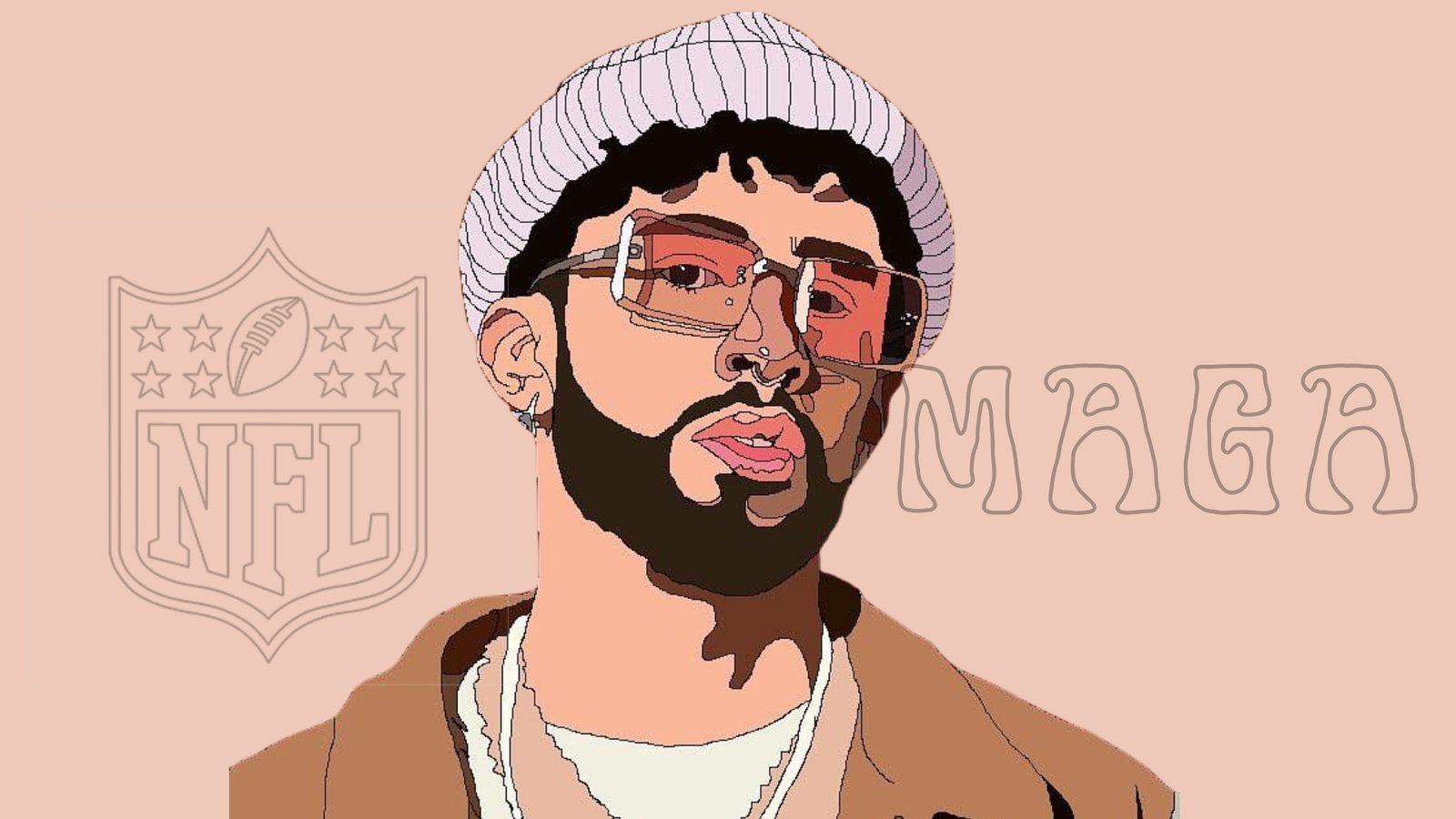
Bad Bunny’s Super Bowl selection shows profound patriotism in America, yet the uproar from certain MAGA supporters reveals something deeper that opens a notion of how racist America is becoming. Furthermore, America’s ongoing struggle with identity, inclusion, and the meaning of patriotism itself sparks more concerning issues between white America and other ethnicities. The controversy surrounding his selection exposes the country’s protectionist tendencies, not only in its economy but also in its cultural and social spaces. The NFL, a league driven by numbers, capital, and global appeal, has once again found itself at the centre of a cultural debate that defines the United States in 2025.
The decision to select Bad Bunny, a Puerto Rican superstar and one of the most-streamed artists on major streaming platforms in the world, to headline the Super Bowl halftime show should have been celebrated as a moment of progress and representation. His meteoric rise to global fame has made him a music icon and a symbol of Latino pride and cultural diversity. Yet, rather than uniting fans, the announcement sparked backlash from conservative circles, particularly among some MAGA supporters who viewed his selection as un-American and removed from the halftime bill.
It demonstrates how cultural patriotism in America is still measured through narrow, exclusionary lenses. Bad Bunny sings primarily in Spanish, represents Puerto Rican identity, and often challenges societal norms through his music and fashion. For some, this defies their idea of what “American” should look and sound like. Ironically, Puerto Ricans are U.S. citizens, and Bad Bunny’s success reflects the multicultural reality of the nation, a reality that many still refuse to fully embrace.
The petitions demanding that the NFL remove Bad Bunny from the halftime performance list are not just bizarre; they are symptomatic of a deeper discomfort with multicultural expression. They highlight how sections of American society continue to resist the changing face of national identity. The idea that only certain types of artists, preferably white, English-speaking, and traditionally “American, can represent the country’s culture on a global stage undermines the very foundation of the United States: a nation built on diversity, immigration, and freedom of expression.
The NFL’s decision to feature Bad Bunny should be understood in the context of globalisation and cultural economics. The league is not just an American institution; it’s a global entertainment brand. The Super Bowl is one of the most-watched events worldwide, and the inclusion of an international star like Bad Bunny expands the NFL’s audience reach across Latin America, Europe, and beyond. In a business sense, it is a strategic move. However, in a cultural sense, it is also a statement, a recognition that American culture no longer exists in isolation, but as part of a larger, interconnected world.
The backlash, then, reflects a kind of cultural protectionism, mirroring the same economic protectionism that dominates modern political discourse. Just as some want to “protect” American jobs from global competition, others want to “protect” American culture from global influence. But this view is self-defeating. The richness of American identity has always come from its ability to absorb, adapt, and celebrate different cultures. From jazz to hip-hop, from salsa to reggaeton, America’s greatest cultural exports have emerged from its melting pot of identities.
Bad Bunny’s inclusion is therefore not a threat to American patriotism; it is an embodiment of it. His performance represents the idea that being American is not confined to race, language, or tradition, but is rooted in freedom, creativity, and individuality. His global success reinforces the idea that America’s strength lies in its openness, not in exclusion.
However, the uproar also signals a worrying trend: multiculturalism in America is fading under the pressure of political polarisation and cultural fear. The MAGA response to Bad Bunny’s performance is not just about music; it’s about ownership of the national narrative. Who gets to define what is “American”? Who gets to stand on the biggest stage and represent the country to the world? Whatever nation they come from, they should be able to do it because they have earned the right to do so.
In the end, Bad Bunny’s Super Bowl performance is more than just entertainment; it reflects on cultural crossroads in the US. The question is whether the nation will embrace its evolving identity or retreat into nostalgia for a past that never truly included everyone. If patriotism means celebrating the best of what America represents, then Bad Bunny’s presence on that stage is not a rejection of American values; it’s their fullest expression of what America was founded on, and these principles should not be rejected even with the rise of MAGA.